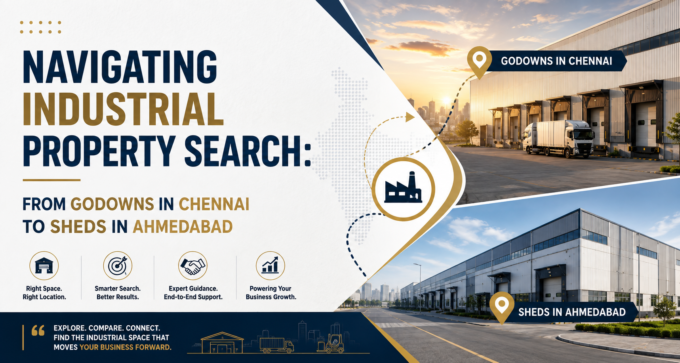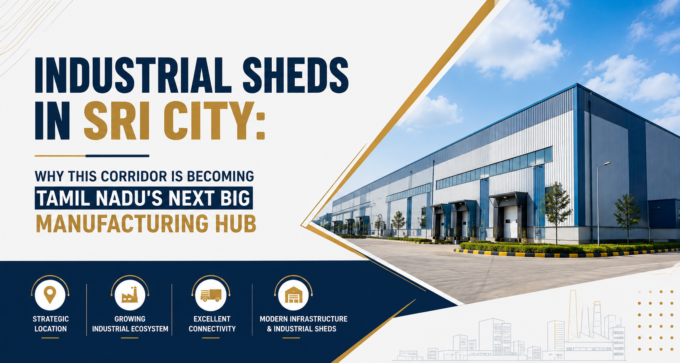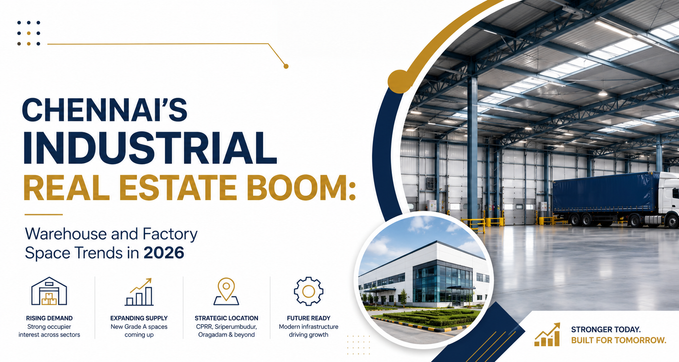

Industrial growth in South India is no longer confined to core hubs—it is steadily expanding outward. As land availability tightens and costs rise in established centers like Chennai, companies are increasingly exploring nearby regions that offer scalability without compromising on connectivity. This shift is clearly visible in areas surrounding Sri City, where emerging industrial markets are beginning to define the next phase of growth.
Why Emerging Markets Matter
These new corridors benefit from their proximity to a strong industrial base while offering larger, more affordable land parcels, lower congestion, and opportunities for planned development. For occupiers, this enables expansion without the limitations typically associated with mature urban markets. Companies that require large‑scale manufacturing facilities or logistics hubs often find it more viable to operate slightly outside core cities—where land aggregation is easier and infrastructure can be designed around their needs.
At the same time, ongoing improvements in road networks, freight connectivity, and industrial corridors are reducing the trade‑offs traditionally associated with such locations. For example, highways linking Chennai to Sri City and beyond have cut travel times significantly, making these emerging nodes attractive for both manufacturing and logistics.
Opportunities for Occupiers
Industrial occupiers are increasingly drawn to these markets for their flexibility. Options such as industrial shed for rent provide cost‑effective solutions for SMEs and mid‑sized companies that need scalable infrastructure without heavy upfront investment. Similarly, factory for lease opportunities allow manufacturers to expand quickly while maintaining financial agility.
For logistics operators, the demand for warehouse shed for sale is rising as e‑commerce and FMCG companies seek strategically located facilities to serve South India. Even specialized sectors such as food processing benefit from cold storage for lease, with emerging markets offering space to build modern, compliant facilities close to agricultural belts.
Investor Advantage
For investors and landowners, this trend opens up a new layer of opportunity. Rather than focusing solely on established hotspots, value creation is increasingly happening in adjacent growth corridors—areas that are still developing but are closely linked to major industrial ecosystems. The availability of industrial land for sale at competitive prices allows developers to build customized facilities aligned with occupier demand.
These markets also offer long‑term appreciation potential. As infrastructure expands and industrial demand grows, land values in emerging corridors are expected to rise steadily. Investors who enter early benefit from both rental yields and capital gains, positioning themselves ahead of the curve.
Infrastructure and Policy Support
The key to sustainable growth in these markets is alignment with infrastructure expansion and policy support. Locations connected to highways, freight corridors, and industrial linkages are likely to see more sustainable appreciation compared to purely speculative markets. State governments have also introduced incentives for industrial development in these regions, including single‑window clearances, subsidies, and tax benefits.
This combination of policy and infrastructure ensures that growth is ecosystem‑driven rather than fragmented. For occupiers, it means reliability and compliance. For investors, it means reduced risk and stronger returns.
Distributed Growth Model
The broader trend is clear: industrial growth is becoming more distributed, planned, and ecosystem‑driven. Emerging markets around Chennai and Sri City are at the forefront of this next phase. They represent a shift from concentrated industrial activity in core hubs to a more balanced model where multiple corridors contribute to regional growth.
This distributed model also supports resilience. By spreading industrial activity across multiple nodes, companies reduce dependency on a single location, mitigating risks related to congestion, rising costs, or regulatory changes.
The Road Ahead
As South India continues to strengthen its manufacturing base under initiatives like “Make in India,” emerging industrial markets will play a critical role. For occupiers, they provide scalability, affordability, and connectivity. For investors, they offer early‑stage opportunities with strong long‑term upside. And for the region, they represent a more balanced, sustainable approach to industrial growth.
The regions around Chennai and Sri City are not just participating in this transformation—they are leading it. With rising demand for sheds, warehouses, factories, and industrial land, these corridors are poised to become the backbone of South India’s next industrial wave.