Introduction
Fire protection is an essential part of industrial building design, particularly in warehouses, manufacturing facilities and distribution centres. An effective sprinkler system can help control a fire at an early stage, protect inventory and reduce property damage.
Understanding industrial building fire sprinkler systems in India helps property owners, developers and facility managers select suitable protection systems based on building design, storage conditions and fire risks.
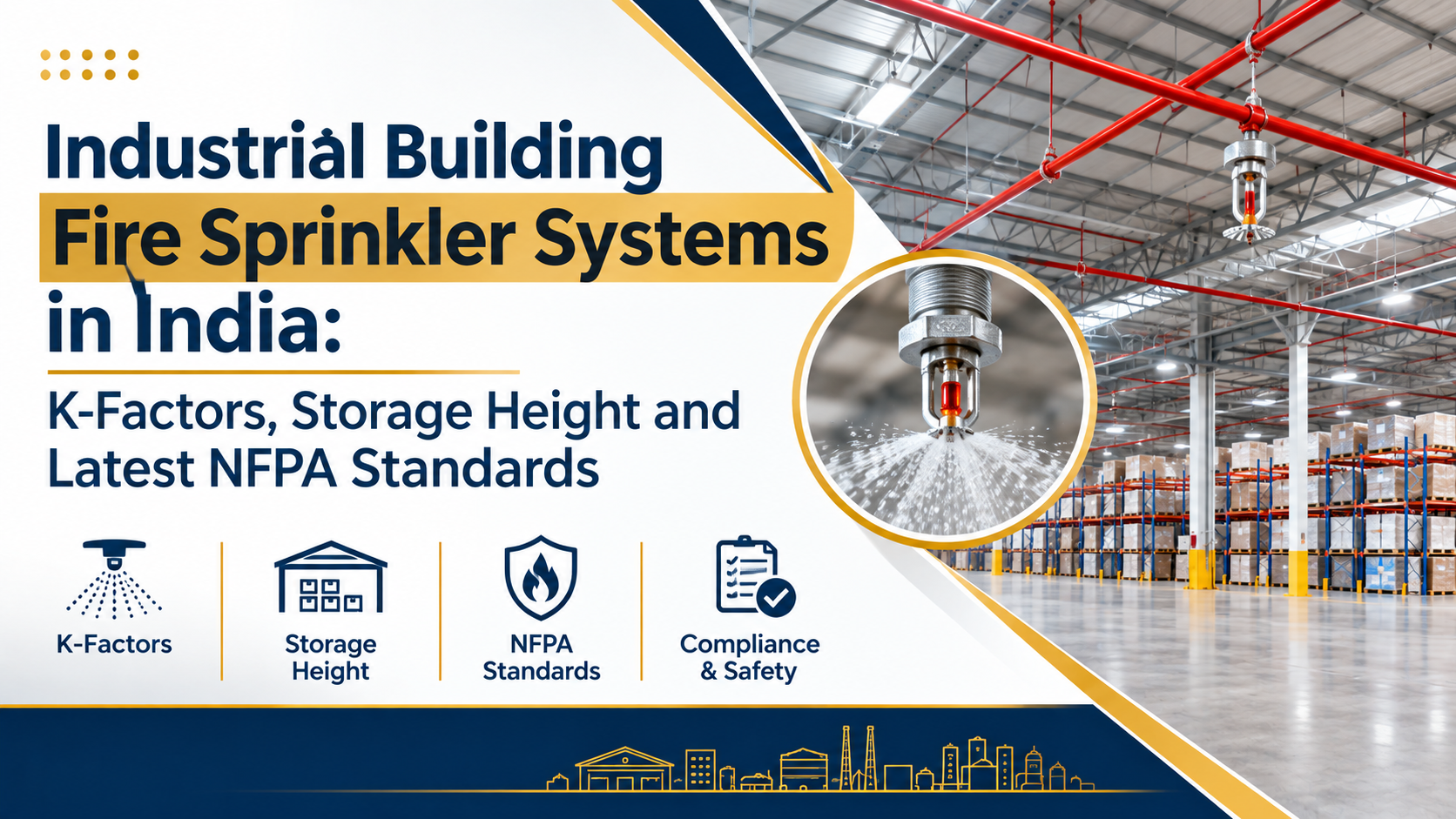
The right system depends on several factors, including sprinkler K-factor, storage height, ceiling height, stored materials, water supply and applicable fire safety standards.
1. What Are Industrial Building Fire Sprinkler Systems?
An automatic fire sprinkler system releases water when individual sprinkler heads are activated by heat. It helps control or suppress a fire before it spreads throughout the building.
A typical system includes:
- Automatic sprinkler heads
- Water storage tanks and fire pumps
- Pipes, valves and fittings
- Flow switches and alarm connections
- Control valves and pressure gauges
- Hydrant systems, where required
The system must suit the building’s specific fire risks. For example, a warehouse storing plastic products may require different protection from a facility storing metal components.
2. Understanding Sprinkler K-Factors
The K-factor describes the relationship between water pressure and the amount of water discharged by a sprinkler.
The general formula is:
Q = K × √P
Where:
- Q: Water flow rate
- K: Sprinkler K-factor
- P: Pressure at the sprinkler
A higher K-factor can deliver more water at the same pressure. However, selecting a sprinkler requires more than choosing a higher K-factor. The sprinkler must suit the building’s fire risks, water supply and approved design.
When designing industrial sprinkler systems, engineers must consider K-factor along with the required water flow, operating pressure and hydraulic calculations.
3. How Does Storage Height Affect Sprinkler Design?
Storage height is an important factor in warehouse fire protection. When combustible materials are stacked vertically, fire can spread quickly through the stored goods and packaging.
Sprinkler design should consider:
- Maximum height of stored goods
- Ceiling or roof height
- Type of stored materials and packaging
- Rack arrangement and aisle space
- Clearance between sprinklers and stored goods
- Obstructions such as ducts, shelves and mezzanines
Higher storage may require a different sprinkler arrangement or additional in-rack protection. The correct solution depends on the materials stored and the applicable design standards.
Businesses should also review fire protection whenever they increase rack heights or change the types of products stored.
4. Types of Sprinklers Used in Industrial Buildings
Different sprinkler types are available for industrial and warehouse applications.
Standard Spray Sprinklers: Used in various buildings, depending on the hazard classification and design requirements.
CMSA Sprinklers: Control Mode Specific Application sprinklers are designed for particular storage fire protection applications.
ESFR Sprinklers: Early Suppression Fast Response sprinklers are designed to suppress fires rapidly in suitable storage environments.
In-Rack Sprinklers: Installed inside storage racks when additional protection at intermediate levels is required by the design.
The appropriate sprinkler type should be selected by a qualified fire protection professional based on storage conditions, building height and fire risk.
5. Indian Standards and NFPA 13
Fire sprinkler design in India must be checked against applicable Indian Standards, building regulations and local fire authority requirements.
Important references include:
- IS 15105:2021: Design and installation of fixed automatic sprinkler fire extinguishing systems.
- IS 3594:2024: Fire safety code of practice for general storage, warehousing and cold storage facilities.
- National Building Code of India: Includes applicable fire and life safety provisions.
- NFPA 13: Standard for the installation and design of sprinkler systems.
The NFPA 13 edition used for a project should be verified against the project’s requirements. The 2025 edition is identified in the available reference material as a current edition.
accindia.org+1
NFPA 13 should not automatically replace Indian requirements. The applicable standards and approval conditions must be confirmed for each project.
6. Water Supply and Hydraulic Calculations
A sprinkler system needs sufficient water flow and pressure to operate as designed. Even correctly selected sprinkler heads may not provide effective protection if the water supply is inadequate.
Hydraulic calculations help determine the required pipe sizes, pressure losses, sprinkler discharge and water supply capacity.
The design should consider:
- Water storage capacity
- Fire pump capacity and pressure
- Pipe sizes and network layout
- Required water flow
- Operating duration
- Applicable water allowances
- Connection with hydrant and other fire safety systems
The complete water supply and pumping arrangements should be designed, tested and maintained according to the applicable requirements.
7. Industrial Building Fire Sprinkler Systems: Inspection Checklist
Before occupying or approving an industrial building, review these essential points:
- Stored materials and fire hazards have been assessed.
- Maximum storage and ceiling heights are documented.
- Sprinkler types and K-factors match the approved design.
- Hydraulic calculations are completed.
- Water tanks and fire pumps meet design requirements.
- Pipes, valves and sprinkler heads are properly installed.
- Sprinklers are not blocked by racks or stored goods.
- Fire alarms and monitoring systems are operational.
- Testing and commissioning records are available.
- Regular inspection and maintenance are arranged.
- Required approvals and compliance documents are verified.
A qualified fire protection professional should verify the design, installation, testing and maintenance arrangements.
Conclusion
Choosing the right sprinkler system requires careful consideration of K-factor, storage height, stored materials, ceiling configuration and water supply. These factors must work together to provide effective fire protection for industrial buildings and warehouses.
Understanding industrial building fire sprinkler systems in India helps businesses make informed decisions when constructing, leasing or upgrading industrial facilities. Following applicable Indian Standards and project-specific fire safety requirements is essential for reliable protection.
At All Warehouses, businesses can explore industrial and warehousing properties suited to their operational needs while reviewing building specifications, storage capacity and fire safety provisions.
Frequently Asked Questions (FAQs)
1. What are industrial building fire sprinkler systems in India?
These are automatic water-based fire protection systems designed for industrial buildings and warehouses. Their design depends on the building layout, stored materials and applicable safety requirements.
2. What is a K-factor in a sprinkler system?
A K-factor describes the relationship between water flow and pressure at a sprinkler. The correct value depends on the approved system design.
3. How does storage height affect sprinkler selection?
Storage height affects how fire spreads through stored goods. The sprinkler design must account for the commodity, ceiling height and rack arrangement.
4. Which standards apply to industrial sprinkler systems in India?
Relevant references include IS 15105:2021, IS 3594:2024, applicable National Building Code provisions and NFPA 13 where appropriate to the project.
5. How often should industrial sprinkler systems be inspected?
Inspection and maintenance should follow applicable standards, manufacturer instructions and local requirements. Any damaged or obstructed components should be addressed promptly.